Women SARChI chairholders’ impactful research tackles some of SA’s most pressing challenges
AcademicsResearch & Innovation
25 August 2026
By Phumla Mkize
Human rights, architecture, science and engineering intersect in research conducted at Tshwane University of Technology by three leading researchers under the South African Research Chairs Initiative (SARChI).
The SARChI, an intervention by the Department of Science, Technology and Innovation (DSTI) and the National Research Foundation (NRF), aims to expand scientific research capacity in South Africa in line with the National Development Plan and to support the country in becoming an internationally competitive knowledge economy.
Empowering people through spatial transformation
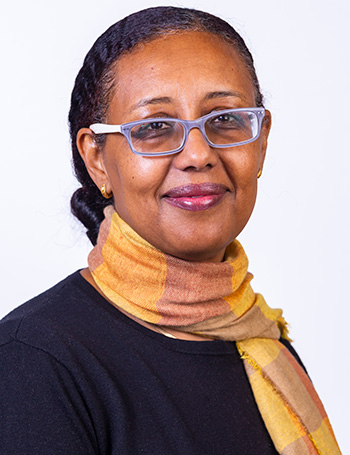 Prof Amira Osman is the DSTI-NRF Chair in Spatial Transformation (Positive Change in the Built Environment.
The legacy of apartheid in the built environment comes under the spotlight with Prof Amira Osman, the DSTI-NRF Chair in Spatial Transformation (Positive Change in the Built Environment), saying it can only be “undone” through targeted spatial restructuring and complex, multi-disciplinary interventions. Prof Osman’s Chair focuses on the inequalities perpetuated by spatial planning in South Africa.
Prof Amira Osman is the DSTI-NRF Chair in Spatial Transformation (Positive Change in the Built Environment.
The legacy of apartheid in the built environment comes under the spotlight with Prof Amira Osman, the DSTI-NRF Chair in Spatial Transformation (Positive Change in the Built Environment), saying it can only be “undone” through targeted spatial restructuring and complex, multi-disciplinary interventions. Prof Osman’s Chair focuses on the inequalities perpetuated by spatial planning in South Africa.
The work conducted under the Chair recognises that built environment professions are many times complicit in practices that disempower, humiliate, restrict opportunities, destroy livelihoods, damage ecosystems and disrupt economic networks, thereby deepening conflict and reinforcing divisions. It also recognises that recruiting built-environment professionals from diverse backgrounds is a step towards transformation.
The Chair also undertakes conceptual and analytical research on spatial transformation, delving into what it means for integrating the planning and design of transport, infrastructure, property and land use (the physical). It also looks at what spatial transformation means in terms of investment decision-making and the governance of urban areas (the political), as well as the aspirations, interactions, perceptions, behaviours and inclusion of people (the socioeconomic).
Post-harvest technology to improve food security
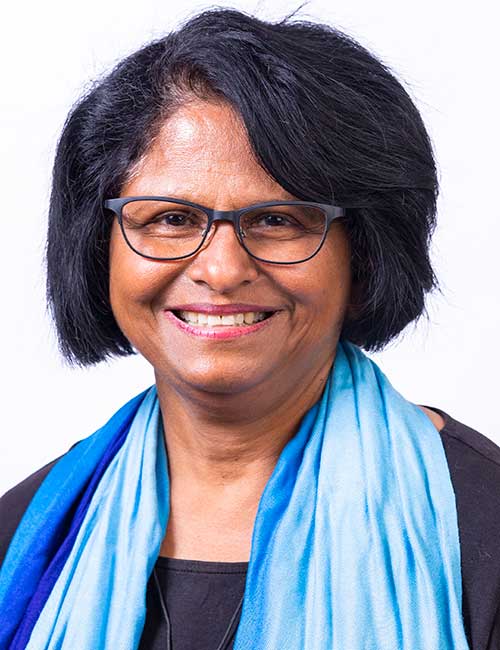 Prof Dharini Sivakumar is the DSTI-NRF Chair in Phytochemical Food Network to Improve Nutritional Quality for Consumers.
While Prof Osman’s work focuses on human settlement, Prof Dharini Sivakumar concentrates on food security. As the DSTI-NRF Chair in Phytochemical Food Network to Improve Nutritional Quality for Consumers, Prof Sivakumar’s work centres on post-harvest technology to reduce losses and waste of fresh produce by targeting key players in the post-harvest supply chain, from production, processing, and packaging to storage, transportation and retail.
Prof Dharini Sivakumar is the DSTI-NRF Chair in Phytochemical Food Network to Improve Nutritional Quality for Consumers.
While Prof Osman’s work focuses on human settlement, Prof Dharini Sivakumar concentrates on food security. As the DSTI-NRF Chair in Phytochemical Food Network to Improve Nutritional Quality for Consumers, Prof Sivakumar’s work centres on post-harvest technology to reduce losses and waste of fresh produce by targeting key players in the post-harvest supply chain, from production, processing, and packaging to storage, transportation and retail.
The objectives of the Chair include manipulating agronomy (light, shade, fertiliser application, cultivar or genome-type selection and different cropping patterns) to improve the nutritional quality of harvested foods. The other aim of the Chair is to observe the impact of processing and storage on the nutritional quality of fresh produce for consumers. It also aims to reduce losses by adopting post-harvest processing of fresh produce, such as introducing solar drying for rural communities.
To feed people in the future, identifying new sources of plant proteins to mitigate the effects of climate change on animal production, which, by its nature, requires a lot of water, is another area of concern for the Chair. The need to identify protein-rich grass that can then be extracted is therefore an important area of research conducted under the Chair.
High-performance materials for renewable energy technologies
Prof Patricia Popoola, the DSTI-NRF Chair in Renewable Energy, focuses on advanced materials research and development that permeate all stages of the energy-power value chain, from energy generation and conversion to storage, distribution and end-use applications.
 Prof Patricia Popoola is the DSTI-NRF Chair in Renewable Energy.
“The development of high-performance materials for renewable energy technologies is essential for efficiently harnessing and utilising sustainable energy resources, thereby mitigating the projected consequences of escalating global energy demand. These advances are vital to achieving a safer, cleaner and more sustainable planet,” she said.
Prof Patricia Popoola is the DSTI-NRF Chair in Renewable Energy.
“The development of high-performance materials for renewable energy technologies is essential for efficiently harnessing and utilising sustainable energy resources, thereby mitigating the projected consequences of escalating global energy demand. These advances are vital to achieving a safer, cleaner and more sustainable planet,” she said.
Prof Popoola’s Chair focuses on developing and implementing innovative strategies that improve the cost-effectiveness, electrochemical performance, energy efficiency and storage capacity of energy materials for renewable energy systems and technologies.
Another key objective of the Chair is the design and fabrication of advanced substitute materials that replace expensive or scarce components in energy and related systems, without compromising and ideally improving, their functional performance and long-term durability. This includes innovations in energy materials that mitigate the current limitations of commercially available transmission conductors, such as restricted current-carrying capacity, higher resistive losses and limited lifespan.
These goals are pursued to ensure broad-based energy affordability and access across diverse socioeconomic groups. Other benefits include environmental preservation and sustainable development.
- TUT has a total of 10 DSTI-NRF Chairs, three of which are held by women who are also C-rated NRF-rated researchers. Prof Sivakumar is rated C1, Prof Osman C3 and Prof Popoola C3.