TUT eMalahleni Human Rights and Active Citizenship dialogue empowers students
AcademicsStudent Life
2 April 2026
By Lucia Sikhosana and Katlego Mashala
Paseka Mofokeng, IEC representative, led a Human Rights Day dialogue at TUT’s eMalahleni Campus, empowering students on civic and democratic participation, rights and accountability.
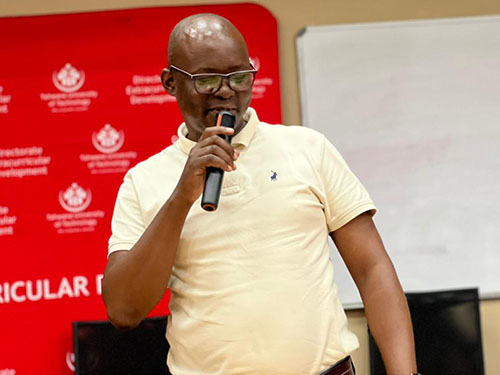 Mr Sehlapelo Malesela, Outreach Officer for Mpumalanga Province, addressing students during the Human Rights Day dialogue.
The event, hosted by the Tshwane University of Technology’s Directorate of Extracurricular Development in collaboration with the Alumni Relations Office, brought together students, staff and stakeholders, including the Public Protector of South Africa, to discuss issues affecting communities and young people.
Mr Sehlapelo Malesela, Outreach Officer for Mpumalanga Province, addressing students during the Human Rights Day dialogue.
The event, hosted by the Tshwane University of Technology’s Directorate of Extracurricular Development in collaboration with the Alumni Relations Office, brought together students, staff and stakeholders, including the Public Protector of South Africa, to discuss issues affecting communities and young people.
Mofokeng highlighted the importance of active citizenship and urged students to participate in electoral processes. He highlighted voting accountability and civic awareness as key to shaping the country’s future.
Sehlapelo Malesela from the Public Protector’s Office reflected on the significance of Human Rights Month and South Africa’s history, including the Sharpeville Massacre. He commented that Human Rights Day honour those who fought for freedom and dignity.
Malesela explained that human rights are grounded in the Constitution through the Bill of Rights, which guarantees access to healthcare, education, housing and water. He outlined the Public Protector's role in investigating maladministration and ensuring accountability across all spheres of government.
He said the office addresses complaints through mediation, investigations, and inquiries, but does not interfere with court processes or private legal matters. He also highlighted the institution’s role in resolving the 2024 NSFAS funding challenges through engagement with higher education stakeholders.
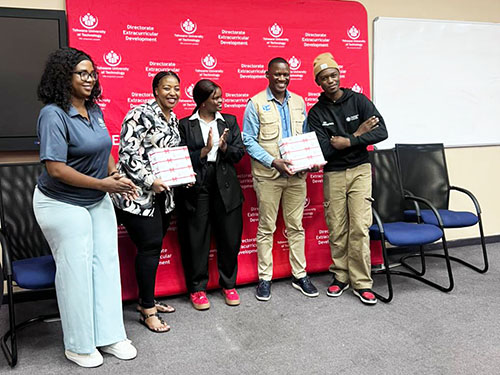 SRC President Nimrod Sambo honouring keynote speaker Mr Paseka Mofokeng with a gift following his impactful address.
The dialogue encouraged students to reflect on their role in promoting and protecting human rights while fostering collaboration between institutions and the student community. A strong turnout despite academic commitments reflected growing interest in these issues.
SRC President Nimrod Sambo honouring keynote speaker Mr Paseka Mofokeng with a gift following his impactful address.
The dialogue encouraged students to reflect on their role in promoting and protecting human rights while fostering collaboration between institutions and the student community. A strong turnout despite academic commitments reflected growing interest in these issues.
In a message of support, the Campus Student Representative Council highlighted the importance of such programmes in raising awareness of socio-economic challenges and promoting human rights, including women’s rights.
The programme also featured a cultural performance by the campus choir that added a reflective dimension to the event.
The dialogue forms part of the University’s commitment to developing socially conscious graduates who actively contribute to democracy and community development.