Student structures publicly commit to respectful and fair SRC elections
Academics
28 August 2026
By Lindokuhle Nkosi
For the first time in the Tshwane University of Technology's (TUT) history, contesting student structures have publicly signed the SRC Elections Code of Conduct, committing themselves to a free, fair and respectful electoral process while reinforcing the principles of tolerance, accountability, respect and non-violence ahead of the upcoming elections.
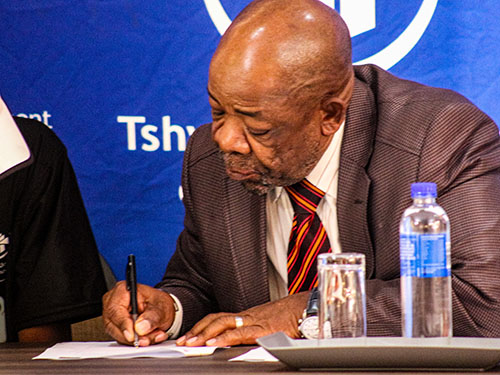 The commitment now moves from pledge to practice as student structures prepare to present their visions and manifestos to students across the University's campuses.
Representatives of various student structures participated in the signing as part of preparations for the elections. More than a procedural requirement, the event represented a public pledge to conduct campaigns responsibly and contribute to an environment where students can freely engage, exchange ideas and participate in the democratic process.
This event was the first public commitment of its kind in the University's electoral history. By placing their signatures behind a collective commitment to tolerance, respect and non-violence, contesting student structures reinforced the University's efforts to promote a transparent, free and fair electoral process. The initiative also highlighted the institution's commitment to creating an environment where differing views can be expressed constructively while ensuring equal opportunities for student participation.
Nare Mathekga, Advisor during the institutional SRC Elections Code of Conduct signing ceremony, said the elections should promote positive engagement among students. He added that while developments in broader communities can influence university campuses, TUT has established systems and rules to guide student affairs.
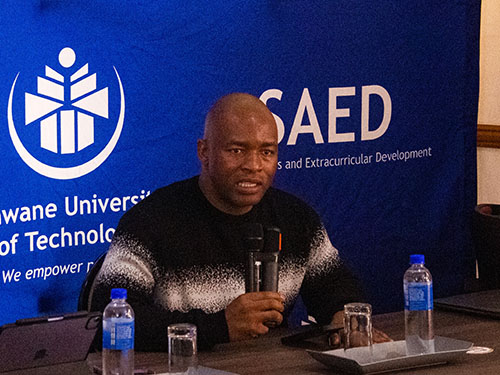 "We want these elections to turn out nothing other than positive," said Mathekga, linking the success of the elections to the University's aspiration of moving "from good to great."
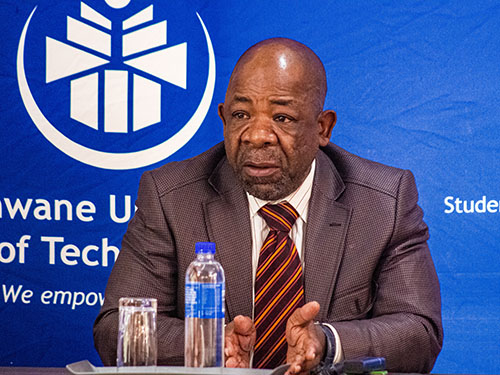
Terry Tselane, Chief Electoral Officer, echoed the importance of creating the right environment for the elections. He emphasised that free and fair elections depend on conditions that enable students to participate openly and confidently.
"No election can take place if the environment within which the elections are taking place is not conducive to free and fair elections," Tselane said.
According to Tselane, the commitment aims to assure students that the University is a space where political engagement, freedom of speech and the exchange of ideas can take place safely.
The signing also highlighted the importance of accountability. By publicly committing to the Code of Conduct, the student structures acknowledged the standards expected of them throughout the electoral process and their responsibility to protect the integrity of the elections.
 The commitment to a free, fair and respectful electoral process will continue during the upcoming manifesto meetings, where contesting student structures will present their visions, priorities and programmes to students across TUT's campuses. The meetings will provide a platform for students to engage directly with candidates, compare ideas and make informed choices ahead of the elections.
As outlined in the SRC Elections 2026/27 programme, manifesto meetings are taking place from 27 August to 3 September 2026 across the University's campuses, including Polokwane, Mbombela, eMalahleni, Ga-Rankuwa, Soshanguve South and Pretoria. The sessions are an important part of the democratic process by encouraging open dialogue and giving students an opportunity to assess how student structures intend to represent their interests. The meetings are also being streamed live, broadening participation and ensuring wider access to electoral information.
 The manifesto engagements are expected to reflect the principles set out in the Code of Conduct, including respect for differing viewpoints, tolerance, accountability, and non-violence. By providing a structured platform for debate and engagement, the University aims to ensure that political participation remains constructive and focused on issues that affect students and the broader TUT community.
The ceremony reinforced the value of student political engagement as part of University life. Diverse viewpoints and robust debate are important elements of student leadership, provided they take place in an environment where participants engage with one another respectfully and constructively. The manifesto meetings will provide an opportunity for contesting student structures to demonstrate their commitment to these principles while presenting their visions for student leadership and governance.
The TUT SRC and FSRC online elections will take place from 9 to 11 September 2026.