Spatial transformation research reimagines African cities and communities
Academics
12 August 2026
What if architecture could reconnect communities separated by colonial borders, help reshape divided cities and create more inclusive futures? These are some of the questions driving research in the Tshwane University of Technology’s (TUT) growing Architecture doctoral programme, where scholars are developing new perspectives on spatial transformation across Africa.
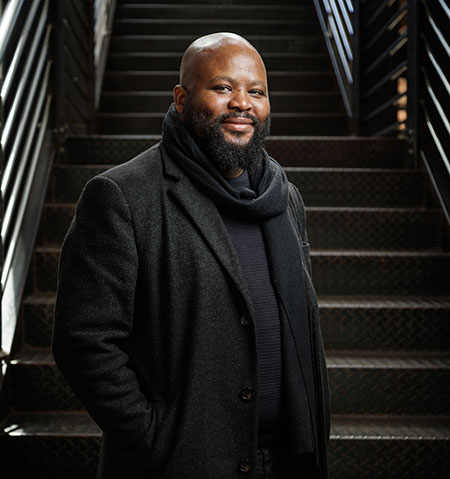 Tebogo Emmanuel Ramatlo
TUT’s Architecture doctoral programme may be relatively new, but it is already attracting talented researchers from South Africa and beyond to tackle some of the continent's most pressing urban and spatial challenges.
Tebogo Emmanuel Ramatlo
TUT’s Architecture doctoral programme may be relatively new, but it is already attracting talented researchers from South Africa and beyond to tackle some of the continent's most pressing urban and spatial challenges.
Led by the SARChI Chair in Spatial Transformation: Positive Change in the Built Environment, the programme brings together researchers investigating African cities, township development, indigenous cultures, faith-based urban change, architectural education and decolonial approaches to urbanism. Their work is guided by spatial justice and decolonial perspectives that seek solutions grounded in African realities.
Prof Amira Osman, Professor of Architecture and Industrial Design at TUT and SARChI Chair in Spatial Transformation, guides the research agenda that examines how the built environment can contribute to positive social change. The programme encourages researchers to challenge conventional thinking and explore new ways of understanding the relationship between people, place and space.
Tebogo Emmanuel Ramatlo, architect, artist and TUT academic, examines fragmented development patterns in African cities. His research compares Johannesburg, Lagos and Cairo to develop a framework that could help advance spatial justice and support more integrated urban regeneration strategies.
.jpeg) Tariq Toffa
Tariq Toffa, educator, writer, architect and doctoral candidate working at the University of Pretoria, explores the role of faith-based organisations in social and spatial transformation. His research investigates how Sufi-inspired humanitarian practice, decolonial knowledge, and cross-sector collaboration can contribute to governance and positive change in post-apartheid South Africa.
Tariq Toffa
Tariq Toffa, educator, writer, architect and doctoral candidate working at the University of Pretoria, explores the role of faith-based organisations in social and spatial transformation. His research investigates how Sufi-inspired humanitarian practice, decolonial knowledge, and cross-sector collaboration can contribute to governance and positive change in post-apartheid South Africa.
Boniswa Preference Duma, a professional architect, project manager, urban designer and doctoral candidate at TUT, focuses on persistent spatial divides in South African townships. His work examines overcrowding, planning regulations and human settlements, with the aim of contributing to more inclusive, sustainable and equitable neighbourhood development.
Aldon Timothy Plaatjie, Doctor of Architecture candidate at TUT, investigates indigenous spatial memory and belonging among Khoi and Nama communities along the Namibia-South Africa border. His research introduces the concept of Restorative Border Architecture, which explores how architecture and spatial planning can help reconnect communities separated by colonial-era boundaries while supporting cultural continuity, heritage preservation and a sense of belonging.
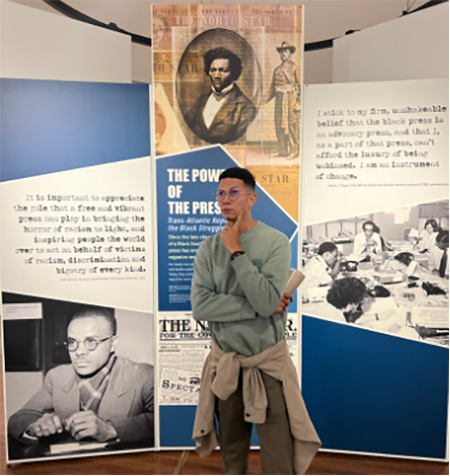 Aldon Timothy Plaatjie
Another researcher contributing to the programme’s growing body of scholarship is Jabu Absalom Makhubu, an architect, urban designer, educator and researcher affiliated with the University of the Witwatersrand and TUT. His doctoral research focuses on how architectural education can better respond to contemporary African urban realities and social challenges.
Aldon Timothy Plaatjie
Another researcher contributing to the programme’s growing body of scholarship is Jabu Absalom Makhubu, an architect, urban designer, educator and researcher affiliated with the University of the Witwatersrand and TUT. His doctoral research focuses on how architectural education can better respond to contemporary African urban realities and social challenges.
Makhubu's thesis, Radical Praxis: Examining the Shifts in Architectural Pedagogic Discourse on Contemporary Urbanisms in Africa at the University of Johannesburg, proposes a transformative framework for architectural education. His research challenges traditional teaching models by positioning design studios as spaces that can advance social change, spatial justice and new forms of knowledge production.
With an international research profile that includes nine peer-reviewed publications comprising journal articles and conference proceedings, Makhubu explores the intersections of architectural pedagogy, African urbanism, decolonial design and critical spatial practice. His work contributes to ongoing debates about how architects are educated and prepared to address the complex social, cultural and spatial challenges facing African cities.
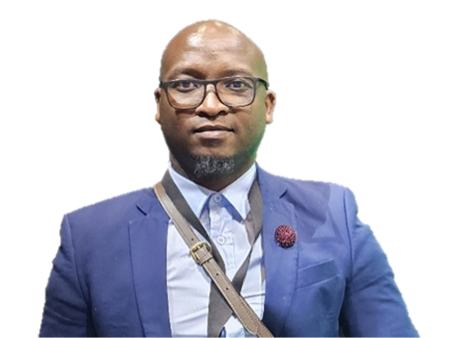 Boniswa Preference Duma
Collectively, the researchers are exploring how architecture can respond to challenges that affect millions of people across the continent, from fragmented urban development and township planning to cultural identity and social inclusion. Their work demonstrates how research can contribute practical ideas for creating cities and communities that are more connected, equitable and responsive to local needs.
Boniswa Preference Duma
Collectively, the researchers are exploring how architecture can respond to challenges that affect millions of people across the continent, from fragmented urban development and township planning to cultural identity and social inclusion. Their work demonstrates how research can contribute practical ideas for creating cities and communities that are more connected, equitable and responsive to local needs.
Although still in its early years, TUT's Architecture doctoral programme is building a community of scholars committed to reshaping African spatial realities. As their research grows, so too does its potential to influence policy, planning and design in ways that support lasting transformation across the continent.
 Jabu Absalom Makhubu