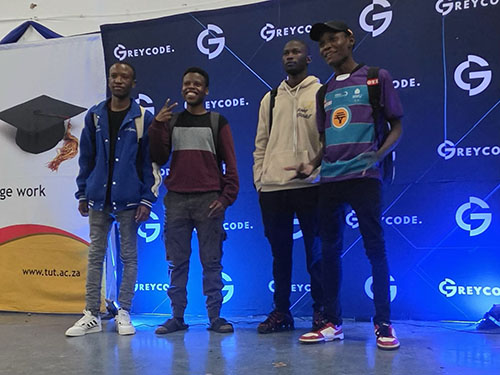
Next-Gen Tech students innovate with IoT at GreyCode Hackathon
Academics
27 May 2026
By Kgothatso Monono
Innovation, teamwork and creativity took centre stage as the GreyCode Hackathon transformed the Tshwane University of Technology (TUT) Soshanguve South Campus into a vibrant hub of problem-solving and technological discovery.
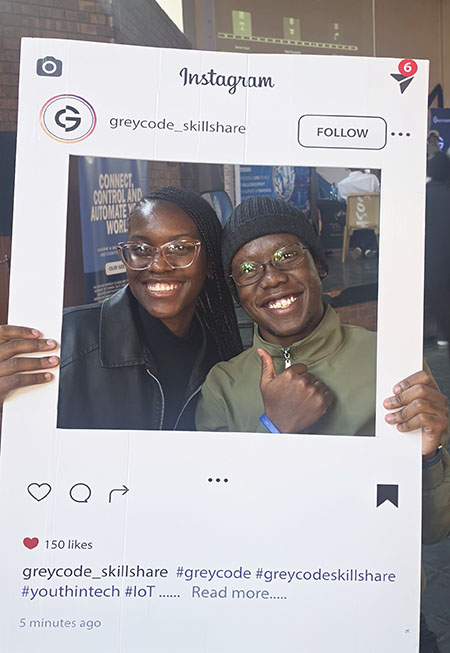 Hosted by GreyCode in collaboration with the Hacker Society and supported by the Amazon Web Services Student Builders Group and Sosh4, the one-day hackathon challenged students to design and build Internet of Things (IoT) solutions using practical coding and hardware skills.
The event attracted students from various institutions, including the University of South Africa (UNISA), the University of Venda (Univen), the North-West University (NWU), the University of Johannesburg (UJ), as well as TUT and participants from Tembisa, creating a diverse environment where varied skills and experiences came together.
Unlike many competitions where participants work with familiar teammates, the GreyCode Hackathon took a different approach. Students were randomly assigned in teams, ensuring full inclusion of those who arrived alone or without prior hackathon experience.
Patience Mabuza, BSc in Mathematics and Applied Mathematics student from the University of South Africa, described the experience as welcoming and enriching. “It was an exceptional experience. I loved how everything was handled, especially the random team assignment. It got to know everyone while working together.”
Organisers intentionally paired experienced participants with beginners to encourage mentorship and make learning more accessible. The hackathon also gave students from across the ICT faculty the opportunity to take part and explore technology and innovation.
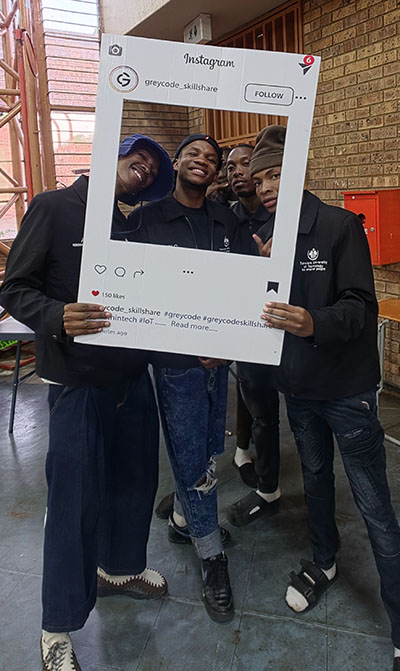 The challenge focused on Internet of Things (IoT) solutions, with participants using coding and hardware to solve real-world problems. Students worked with components such as sensors, LED lights, switches and boards, as well as software tools like Visual Studio Code and PlatformIO.
Working against the clock, teams developed prototypes designed to demonstrate practical applications of IoT technology. One example involved creating a sensor-based smart bin that automatically opens when a hand passes near the sensor, built with limited demonstration equipment and carefully coded interactions between software and hardware.
Recognising that not all participants had coding backgrounds, organisers provided guidance documents containing instructions and examples to help beginners contribute meaningfully to their teams.
To promote originality and independent thinking, students were instructed to disconnect from the internet during the challenge, encouraging teams to rely on collaboration, experimentation and their own problem-solving abilities.
Boikanyo Baloyi, a third-year Computer Science Extended student, reflected on the competition's demanding nature after his team secured second place. “The hackathon was challenging, difficult and full of obstacles, but worth it since my team came out number two.”
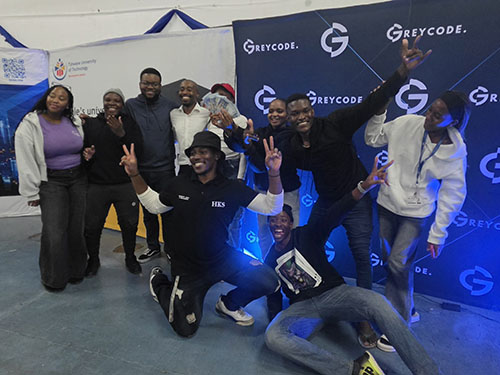 The event was also supported by industry partners and mentors. GreyCode welcomed guests and judges from MICT SETA, Mafari Wireless and I-Innovation, giving students the opportunity to learn from industry professionals and gain insight into what employers expect.
The success of the hackathon was made possible by support from the Executive Dean of the FoICT Office. Special thanks were given to Dean Dr Etienne van Wyk and Thoriso Kekana for helping create opportunities for students to showcase their innovation and represent TUT.
Reflecting on the event, Hacker Society Chairperson Rea Son thanked all the partners, organisers and participants for working together to make the hackathon a success.