Mariette Deist makes doctoral history in orthotics and prosthetics
Academics
14 October 2026
When Mariette Deist walks across the stage at Tshwane University of Technology on 15 October 2026, she will not simply be receiving a doctoral degree. She will be making academic history in South Africa.
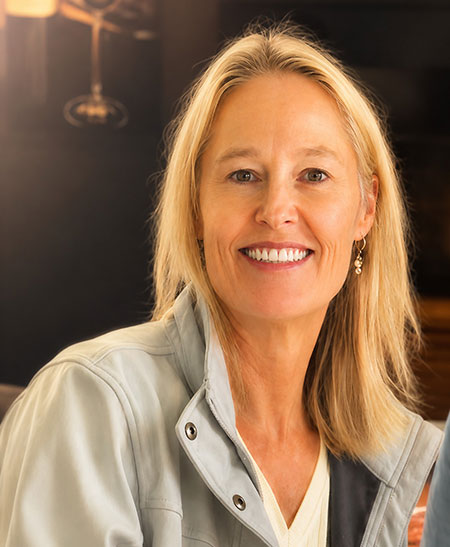 Mariette Deist is the first person in South Africa to receive a PhD (Science): Medical Orthotics and Prosthetics.
Deist will become the first person in South Africa to receive a PhD (Science): Medical Orthotics and Prosthetics, a milestone that represents both a remarkable personal achievement and an important stage in the development of medical orthotics and prosthetics as an academic and research discipline.
Mariette Deist is the first person in South Africa to receive a PhD (Science): Medical Orthotics and Prosthetics.
Deist will become the first person in South Africa to receive a PhD (Science): Medical Orthotics and Prosthetics, a milestone that represents both a remarkable personal achievement and an important stage in the development of medical orthotics and prosthetics as an academic and research discipline.
The significance of the achievement lies in the qualification's specificity. Doctoral research relevant to prosthetics, rehabilitation and related areas has been undertaken in South Africa through broader academic fields. Deist’s doctorate is different: medical orthotics and prosthetics is the discipline in which the qualification itself is situated.
TUT’s Faculty of Science, through the Department of Rehabilitation and Dental Sciences, has developed postgraduate academic capacity specifically within medical orthotics and prosthetics. TUT is currently the only South African university with CHE-recognised Master’s and PhD programmes specifically in medical orthotics and prosthetics.
Deist’s own research demonstrates why this distinction matters. Her thesis, entitled “The Development of a Competency Framework and Assessment Tool for Final Year Students in Medical Orthotics and Prosthetics at a University in South Africa”, investigates how the exit-level competence of final-year medical orthotics and prosthetics students can be defined and assessed in the South African context.
At the centre of the research is a fundamental professional question: what must a graduate demonstrate before entering independent practice?
Deist’s response is a competency framework aligned with the minimum standards for the education and training of medical orthotists and prosthetists prescribed by the Health Professions Council of South Africa. From this framework, she developed an approach for assessing whether final-year students have acquired the competencies required for independent professional practice.
For Deist, this research is closely connected to a career spanning more than three decades across clinical practice, academia, programme management, professional leadership and research. She became closely involved in the development and growth of the Medical Orthotics and Prosthetics programme, contributing to curriculum design, programme implementation and industry engagement. She was instrumental in the development and establishment of the Bachelor’s programme and has led key aspects of teaching and learning within the senior years of study.
Her academic progression also reflects the discipline’s own development. When Deist pursued her Master’s degree in 2015, there was no Master’s qualification in orthotics and prosthetics available in South Africa that met her academic and professional requirements. She, therefore, obtained a Master of Science in Prosthetics Rehabilitation Studies from the University of Strathclyde.
That qualification subsequently contributed to the academic capacity required to develop and deliver postgraduate education in the discipline. The same principle applies at doctoral level: the establishment of postgraduate qualifications requires academics with appropriate postgraduate expertise to teach, supervise and develop research within the field.
Her contribution to the development of orthotics and prosthetics within South African higher education extends beyond the university. She was co-opted to the Orthotics and Prosthetics Board of the Health Professions Council of South Africa in 2012 and subsequently re-elected, including serving as Vice Chair. Her professional contributions have included education, accreditation and professional standards. Internationally, she has been involved with the International Society for Prosthetics and Orthotics, including scientific and education-related activities.
One of her proudest professional achievements has been leading the process of securing international accreditation for TUT’s Medical Orthotics and Prosthetics programme through ISPO. The accreditation provided international recognition that the programme had been evaluated against standards within the specific professional field of orthotics and prosthetics.
Deist has identified her goal as becoming a leader in research in orthotics and prosthetics. Her PhD provides an important foundation for that ambition, but its significance reaches beyond her individual career.
When she receives her doctorate on 15 October, she will become the first person in South Africa to hold a PhD (Science): Medical Orthotics and Prosthetics. It will be a personal milestone built on decades of clinical and academic experience, but it will also represent something larger: the continued establishment of medical orthotics and prosthetics as a discipline capable of generating its own doctoral research, developing its own academic expertise and shaping the future of its profession.