How a Ford-backed TUT team of students conquered the Sasol Solar Challenge
Academics
12 November 2026
By Calvin Fisher
A group of students from the Tshwane University of Technology have just become the first South African team ever to win the Sasol Solar Challenge.
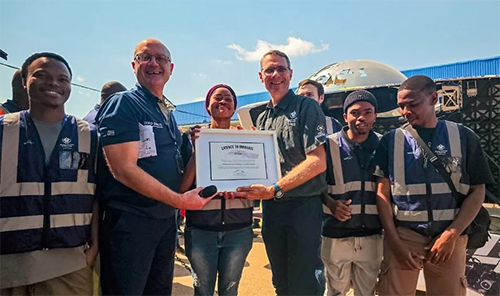 Students from the Tshwane University of Technology hace become the first South African team over to win the Sasol Solar Challenge with their Ford-powered vehicle.
We know a thing or two about engines here in South Africa – electric ones too. But when it comes to solar power, we did the sensible thing and asked a bunch of students. Really, really bright ones.
A vehicle that draws every available watt from the sun? That’s where I happily step aside for the professionals. In this case, the professionals are students.
Specifically, young sparks from the Tshwane University of Technology (TUT), who have just become the first South African team ever to win the Sasol Solar Challenge. And they didn’t scrape it, either. They beat the rest of the field by more than 500km.
Mind you, it’s a challenge, not a race.
The rules are deceptively simple: 18 cars across three classes spend eight days harvesting sunlight to cross the spine of Mzansi, and whoever covers the most ground on their own, errr, steam, wins. The trick is doing it without hoisting the car onto a trailer every time things turn gnarly. And gnarly they turned, with foul weather, unforgiving road surfaces and the sworn enemy of anything light and slippery – the wind.
Redemption road
Two years ago, this same team’s dream ended almost before it began, when Sunchaser 4 rolled into a ditch on day one. So this year was personal. Nobody felt that more than project and team manager Johannes De Vries, the man who sold his caravan during Covid to build TUT’s very first solar car.
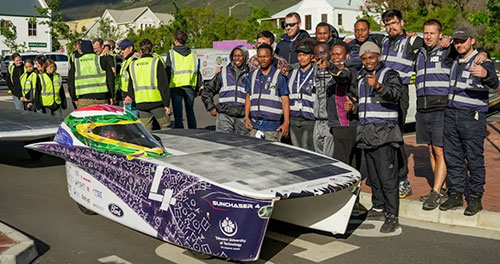 A group of students from the Tshwane University of Technology have just become the first South African team over to win the Sasol Solar Challenge.
The team was already an engineering powerhouse, built on the backs of plucky mechatronics students and engineers. Then Ford South Africa came on board, and not merely as a sticker on the bodywork. Ford supplied a fleet of Tourneo support vehicles, which the students promptly stuffed with high-tech monitoring equipment; and, perhaps more importantly, mentors to lean on.
The team was invited to the Silverton plant, widely regarded within Ford as its highest-quality plant in the world.
“This place is like a mechatronics playground,” says Cornell Meyer, one of the team’s returning members.
Here’s the thing about that kind of exposure. A lecture hall teaches you the theory. A world-class production line and engineers willing to take your calls teach you how the real world works. Many of these students were first-timers, and they walked away with a head start on an engineering career most graduates can only dream of.
Gremlins and soggy tents
It wasn’t smooth sailing. A misfiring LED indicator on the dashboard nearly stopped them at scrutineering. The incredibly rigid carbon fibre wheels turned every tyre change into a nightmare. And Mother Nature served up rain-soaked tents and soggy roadside maintenance.
Then, at last, the challenge got under way on a balmy morning in Sasolberg, winding 3 000km via Kimberley, Clanwilliam and Franschhoek before finishing in Paarl. Bar one brief moment of force majeure, the car did it under its own power. No leaning on a trailer. Just sunshine, sweat and seriously clever engineering.
The result? Top honours against international entries from India and Switzerland, plus several local rivals, including another student team piloting a previous-generation Sunchaser.
Which leaves me rather hopeful. If this is what South Africa’s next generation of engineers looks like, we’re in very good shape. Ford clearly agrees, judging by the award of excellence its CEO handed the team.
So what’s next for Mzansi’s new favourite champions? The Sasol organisers are officially opening the competition to alternative energy sources such as hydrogen. For these young sparks, the sky’s no longer the limit.
Good on you, TUT.