FEBE alumni share industry insights and business opportunities
Academics
27 October 2026
By Mosima Rafapa
A qualification may open the door to a career, but succeeding in the workplace requires more than academic knowledge. For aspiring entrepreneurs, turning an idea into a viable business also demands insight, commitment and access to the right support.
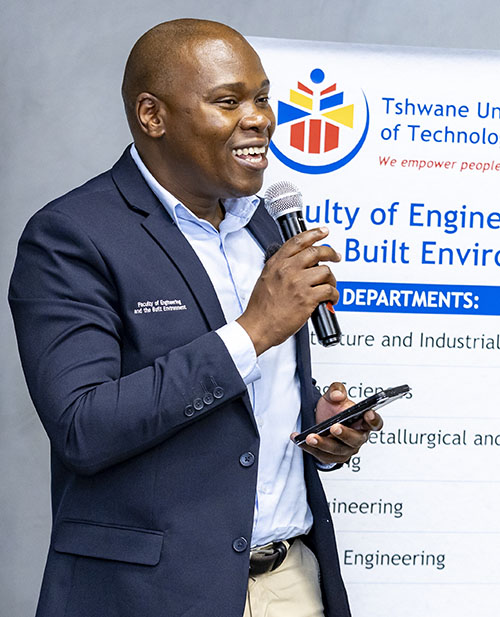 FEBE Executive Dean Prof Mxolisi Shongwe urged alumni and industry partners to strengthen ties with the faculty and prepare graduates for evolving workplace demands.
These themes took centre stage at the Faculty of Engineering and the Built Environment’s (FEBE) Alumni Roundtable Engagement, held at The Capital Menlyn Maine. The engagement brought together alumni, industry professionals, students and faculty representatives to share insights on workplace expectations, emerging industry trends and business opportunities.
Welcoming guests, FEBE Executive Dean Prof Mxolisi Shongwe highlighted the faculty’s achievements in student innovation, research and industry-focused initiatives. He called on alumni and industry partners to deepen their engagement with the faculty by contributing to curriculum alignment, mentoring graduates and supporting entrepreneurship.
“We want to strengthen the relationship between FEBE, our alumni and industry so that we can better prepare our graduates for the demands of the workplace. Our alumni have valuable experience and insights that can help us identify skills gaps, create opportunities for mentorship and support young graduates who want to start their own businesses,” said Prof Shongwe.
Leading the panel discussion, FEBE Assistant Dean for Special Projects, Work Integrated Learning and Community Engagement, Dr Isaac Tlhabadira, explored evolving industry trends and the importance of ensuring that academic programmes remain responsive to developments in the workplace, including emerging technologies, software and equipment.
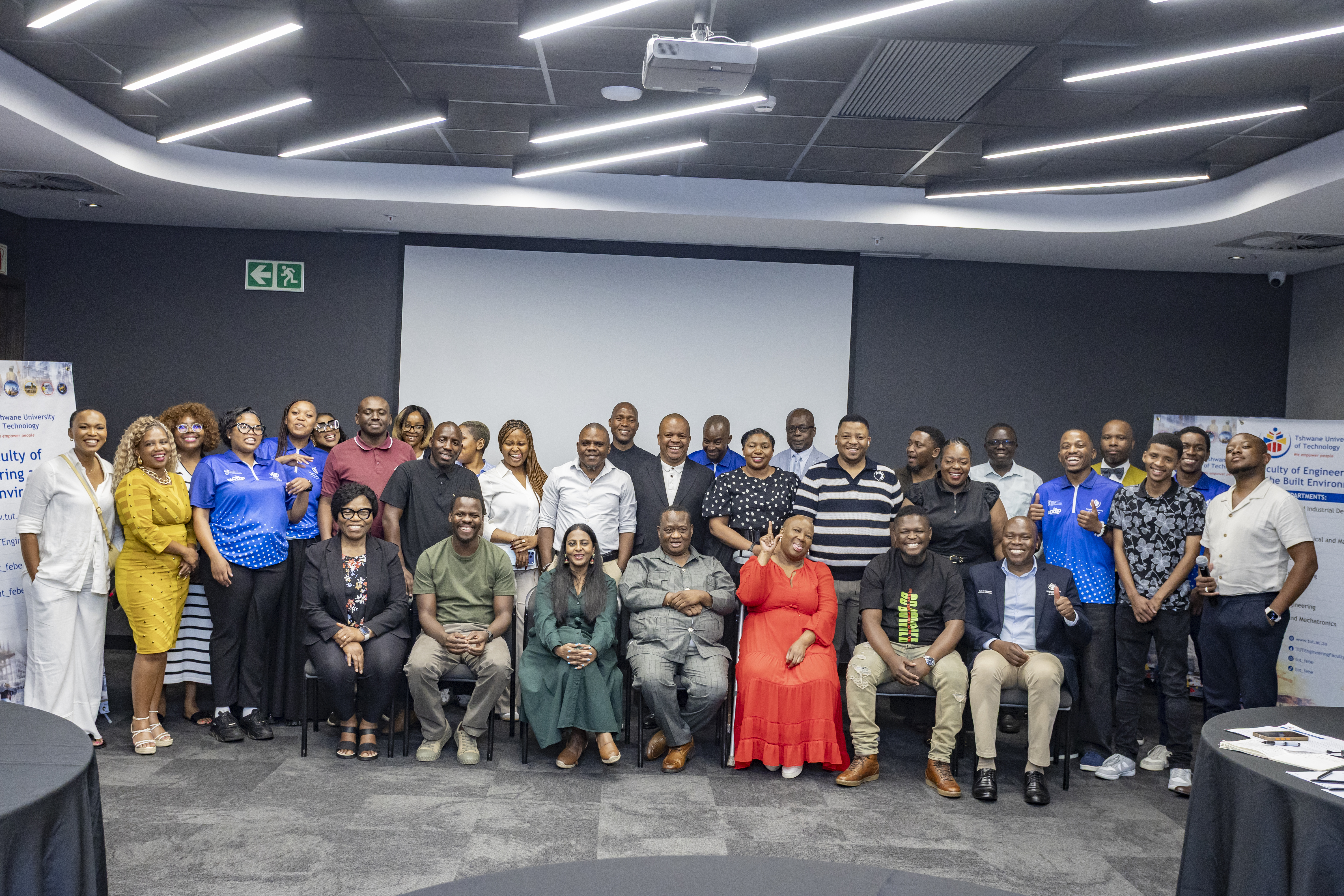 FEBE alumni, industry leaders and faculty discussed graduates’ needed skills, evolving industry demands and ways to support future engineers and built-environment professionals.
“Our intention is to produce graduates who are not just good, but great. That means listening to industry, understanding how workplaces are changing and ensuring that our curriculum responds to those needs. The engagement also allows our students to learn directly from alumni, who can share practical advice and help them understand what employers expect beyond their academic qualifications,” said Dr Tlhabadira.
The discussion underscored the importance of combining technical competence with essential workplace skills. Koketso Segale, a Training, Development and Talent Officer at an engineering manufacturing company, highlighted communication, time management and conflict management as important attributes for graduates entering the workplace.
Electrical Engineering alumnus Daddy Khuselo, who has 25 years of industry experience, emphasised that qualifications alone do not guarantee professional success.
“Graduates also need to develop their attitudes just as they develop their craft. This means having a teachable spirit, a willingness to learn from others, and openness to feedback. Effective communication is important because, no matter how good an idea is, people won’t support it if you can’t communicate its value. Students should prepare for the workplace while they are still studying by developing these skills and learning about the industries they want to work in,” said Khuselo.
The engagement also provided students and student mentors with an opportunity to interact directly with alumni, ask questions and gain practical insight into workplace expectations.
Metallurgical Engineering alumnus Mpho Kgatla shared his experience of creating business opportunities through Mpho Kgatla Holdings, which he founded in 2019. Its venture, MK Refineries, provides consulting services to mines and refineries. His businesses have also created opportunities for FEBE students and graduates to enter the mining sector.
“There are opportunities in the mining sector, but you must identify the gaps and find ways to address them. For me, entrepreneurship is not only about building a successful business. It is also about creating opportunities for others, including young graduates who need a chance to gain experience and enter the industry,” said Kgatla.
Sir Stuart Ntlathi, founder of the Stuart Ntlathi Science, Engineering & Technology Institute, encouraged aspiring entrepreneurs to invest in their ideas and demonstrate commitment when seeking support.
The conversation also turned to funding opportunities available to entrepreneurs. Mahlatse Mothapo, Deputy Director of Strategic Partnerships and Customer Care Incentives at the Department of Trade, Industry and Competition, outlined business support programmes, including the Black Industrialists Scheme and Manufacturing Support Programme. He explained that qualifying businesses may access non-repayable grants, subject to programme requirements and their potential contribution to job creation, industrial growth and transformation.
Through the roundtable, FEBE strengthened the connection between academic preparation and the realities of industry, while giving students access to the experience of alumni and professionals who have navigated both employment and entrepreneurship.