Contemporary jewellery goes beyond adornment
Academics
11 August 2026
By Gerrit Bester
Jewellery students at the Tshwane University of Technology’s (TUT’s) Faculty of Arts and Design have embraced Artificial Intelligence (AI) to design pieces of jewellery that speak out against Gender-Based Violence and Femicide (GBVF).
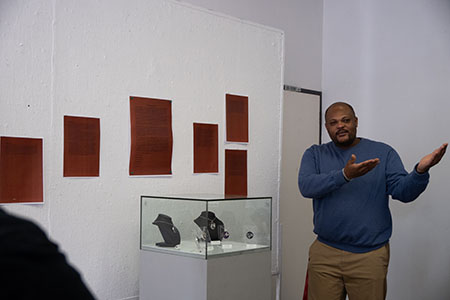 “There is currently an endless debate about whether students should use AI in higher education,” says Thabang Mamabolo, a Jewellery lecturer who initiated the project.
“The reality, however, is that AI is inevitable. Instead of asking whether students should use AI, we should be asking how we can teach them to use it ethically. Furthermore, how can AI be meaningfully integrated into practice-based modules in the arts?” Mamabolo notes.
As part of this approach, second-year Jewellery students were given a brief to use the Large Language Model (LLM) of their choice to help them design a resin pendant centred on the theme of GBVF. They were then asked to use the same LLM to help them develop pointers for writing a rationale for their design. The final stage of the project involved manufacturing the pendants, translating the AI-assisted concepts into tangible jewellery pieces that convey messages about GBVF.
According to Mamabolo, the purpose of this assessment was to encourage students to engage critically with AI-generated content, rather than simply reproducing it. "Teaching the ethical use of AI should begin with simple exercises that encourage students to think independently while using AI as a research assistant, rather than as a substitute for their own ideas. This approach develops critical thinking and demonstrates how AI can support creative practice without undermining originality.”
Mamabolo adds that, more importantly, the project positioned jewellery as a means of addressing the urgent social issue of GBVF.
"Students were challenged to create more than just decorative objects; they were tasked with using design to communicate empathy, resistance, remembrance and advocacy. Translating such a complex and emotionally charged issue into wearable objects required them to critically reflect on the realities of GBVF, considering how jewellery could provoke dialogue, raise awareness and encourage social engagement. By combining the use of ethical AI with socially responsive design, the project demonstrates how contemporary jewellery education can cultivate responsible technological literacy and meaningful artistic practice.”
The jewellery pieces designed as part of the project were exhibited at TUT's 3rd annual GBVF symposium, which was themed Resonant Voices: Artivism Against Silences.
The pieces on exhibit were made by:
- Marumo Tshego
- Lerato Manyane
- Samkelo Sikhosana
- Khwezi Mtshali
- Fezile Aniamah
- Kenosi Kutu
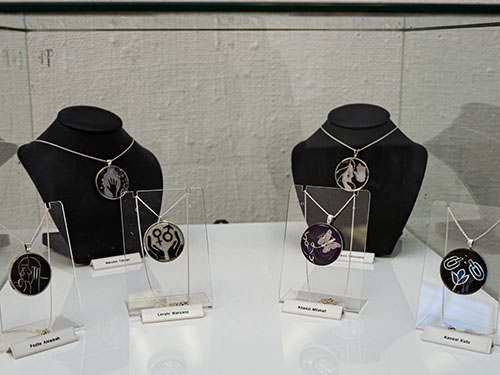 AI-assisted resin pendants created by second-year Jewellery students at the Tshwane University of Technology were exhibited at the 3rd Annual GBVF Symposium, Resonant Voices: Artivism Against Silences, showcasing contemporary jewellery as a platform for dialogue, remembrance and advocacy. Thabang Mamabolo (photo), a Jewellery lecturer, initiated the project. PHOTOS: Thabo Dlamini